Singapore Becomes a "Super-Aged Society": What the 2026 Population Data Shows
Singapore has crossed the "super-aged society" threshold, with more than one in five citizens now aged 65 and above, according to the Population in Brief 2026 report by the National Population and Talent Division (NPTD), released alongside the Department of Statistics' Population Trends, 2026 report. Together, the two reports offer a detailed picture of Singapore's ageing population, shrinking households, declining fertility, and the role immigration plays in the country's demographic trajectory.
Singapore crosses the "super-aged" threshold
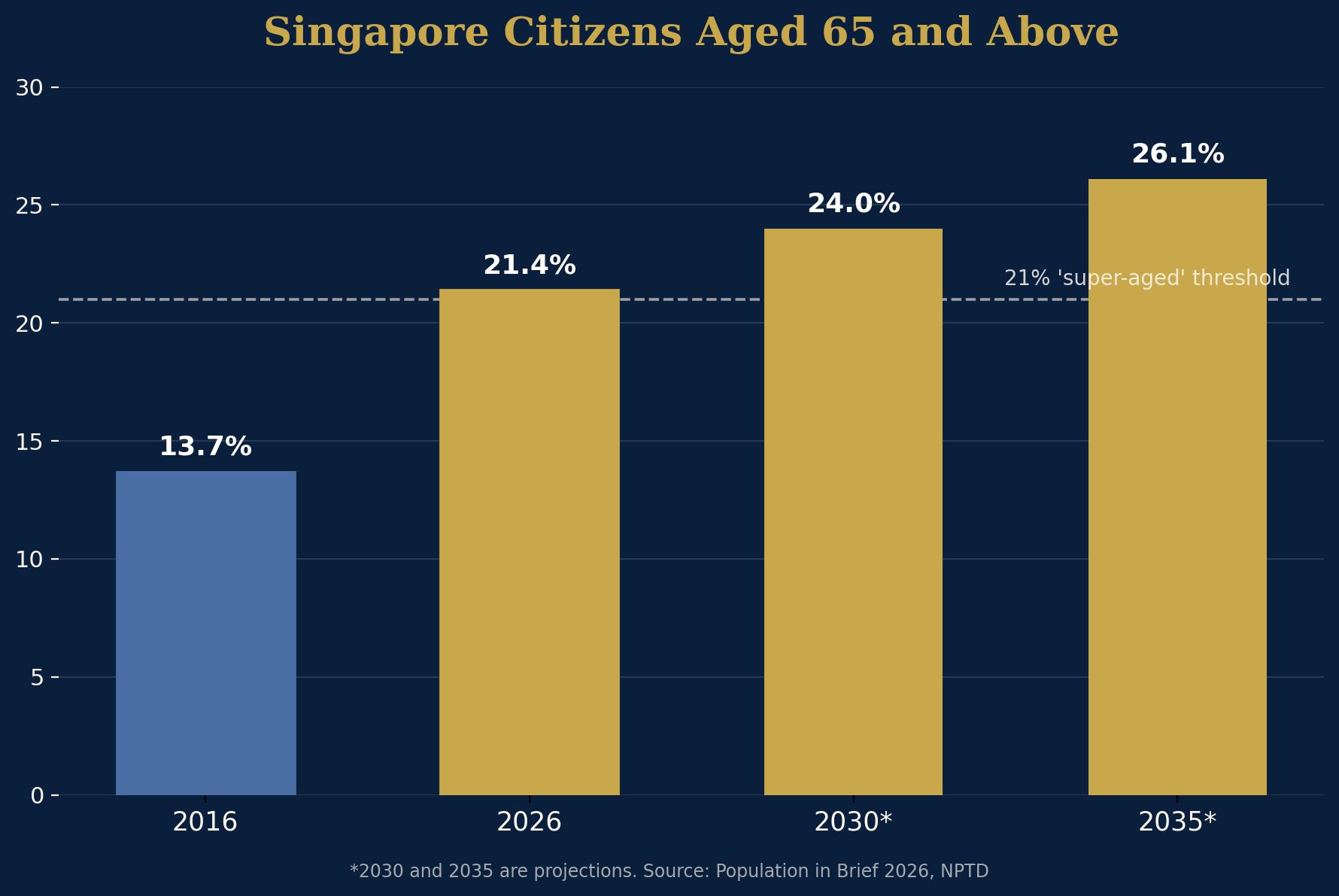
As at June 2026, 21.4 percent of Singapore citizens were aged 65 and above, crossing the internationally recognised 21 percent threshold for a "super-aged society." On a broader resident basis (citizens and PRs combined), the Department of Statistics reported a similar trend: 19.5 percent of residents were aged 65 and above in 2026, up from 18.8 percent in 2025 and 12.4 percent a decade earlier, with the median resident age rising to 43.6 years.
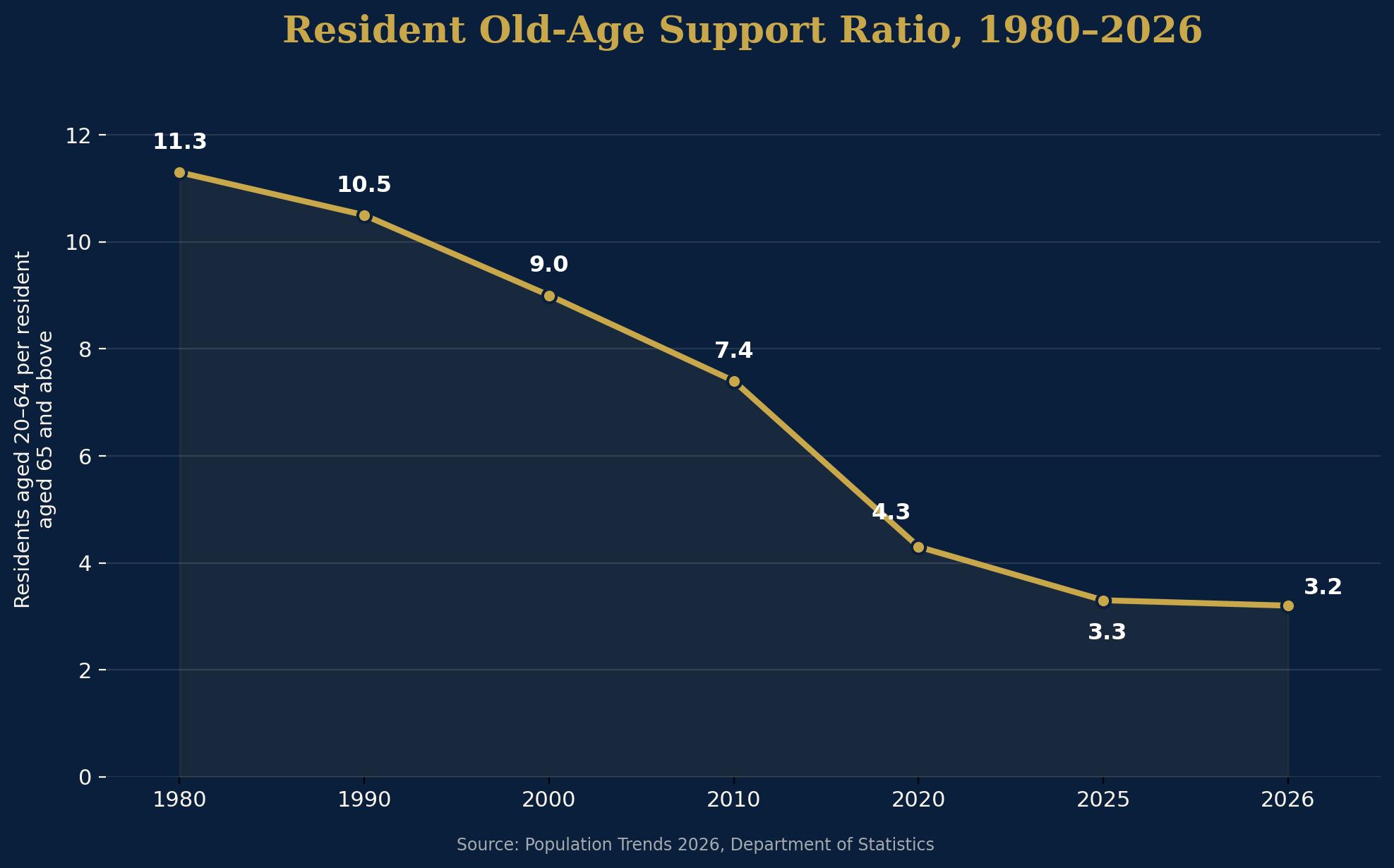
The number of citizens aged 80 and above grew 60 percent over the past decade, from 95,000 in 2016 to 152,000 in 2026. The resident old-age support ratio, the number of residents aged 20-64 for every resident aged 65 and above, fell from 5.4 in 2016 to 3.2 in 2026, and NPTD projects more than one in four citizens will be aged 65 and above by 2035.
Population composition
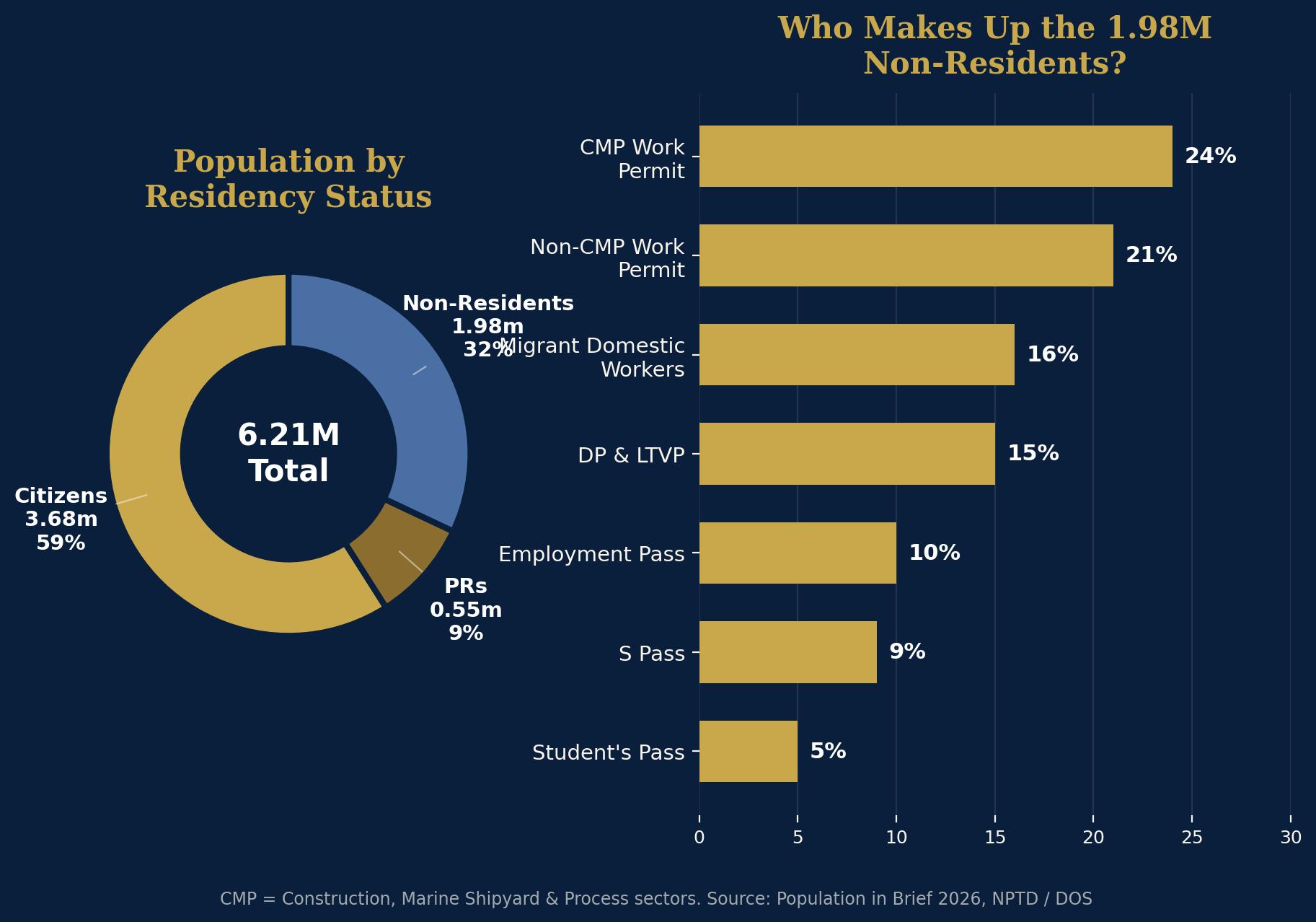
Singapore's total population reached 6.21 million as at June 2026, a 1.6 percent increase from the year before, comprising 3.68 million citizens (59 percent), 0.55 million permanent residents (9 percent), and 1.98 million non-residents (32 percent). Growth was driven mainly by the non-resident population, which grew 3.7 percent, particularly work permit holders in the construction, marine shipyard and process sectors.
Among non-residents, the largest groups were CMP work permit holders (24 percent), non-CMP work permit holders (21 percent), migrant domestic workers (16 percent), Dependant's Pass and Long-Term Visit Pass holders (15 percent), Employment Pass holders (10 percent), S Pass holders (9 percent), and Student's Pass holders (5 percent).
Immigration's stated role
Singapore granted citizenship to 25,094 people and permanent residency to 35,352 people in 2025. From 2021 to 2025, an average of 22,400 citizenships and 34,600 PRs were granted annually, up from averages of 20,600 and 31,200 respectively from 2016 to 2020. NPTD noted that many new citizens and PRs had family ties to Singaporeans, or had studied, worked, or lived in the country for some time.
NPTD's report stated directly: "Immigration helps to moderate the impact of ageing and low birth rates on our citizen population, and keeps the citizen population from shrinking over the long term."
Family formation
Singapore recorded 24,688 civil and Muslim marriages in 2025 (DOS, all residents), 6.2 percent lower than 2024; on a citizen-only basis, NPTD recorded 21,671 citizen marriages, down 5.6 percent. The median age at first marriage rose to 31.1 years for grooms and 29.6 years for brides (DOS), continuing a decade-long trend toward later marriage. Transnational marriages made up 37 percent of citizen marriages in 2025, and inter-ethnic marriages made up 19 percent, both broadly stable over the past decade. Divorces and annulments totalled 7,242 in 2025, a slight decrease from 2024.
Fertility
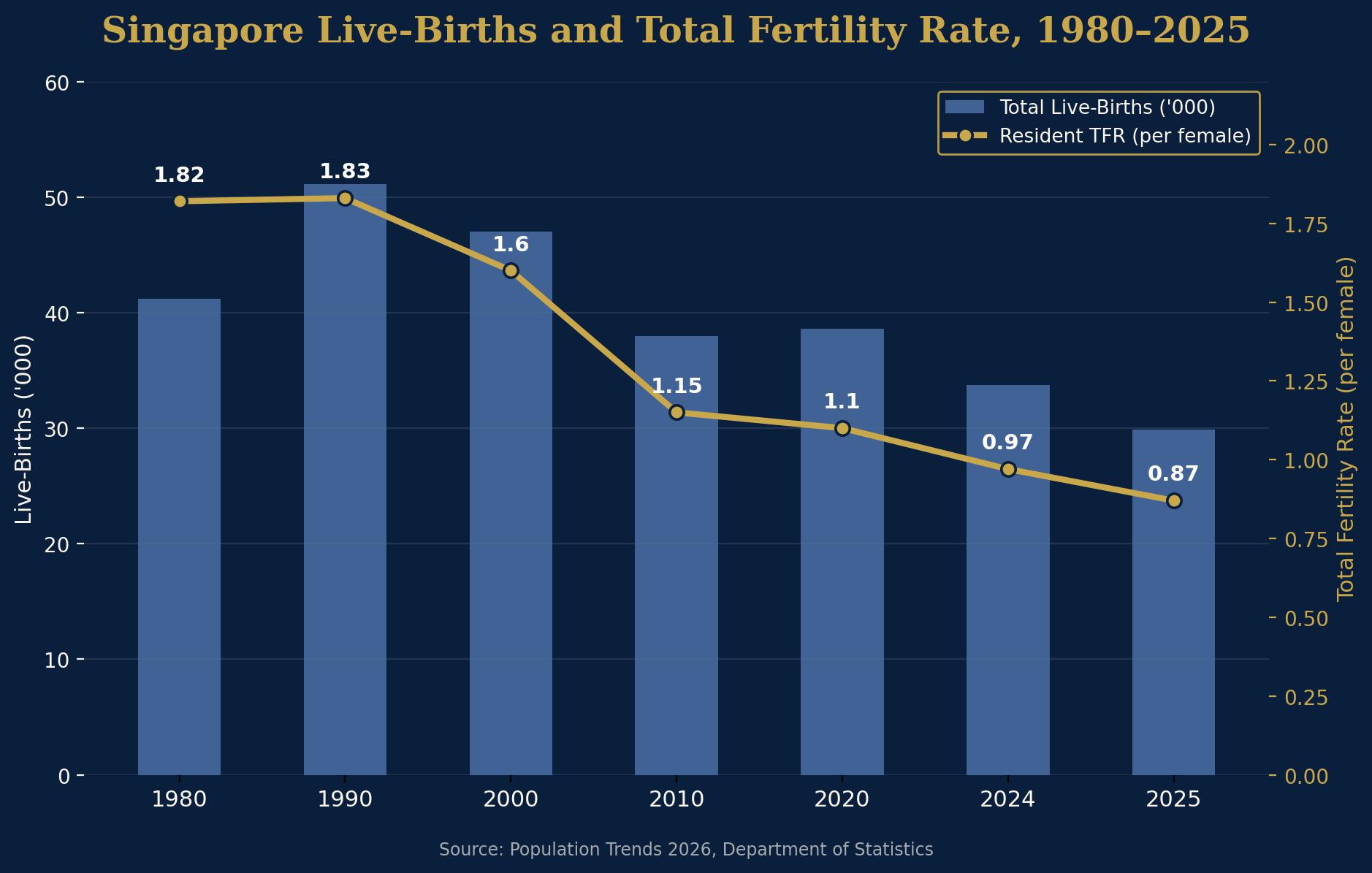
There were 29,864 live births in Singapore in 2025, down 11.4 percent from 33,703 in 2024, with the resident total fertility rate falling to 0.87 births per female, from 0.97 in 2024. Citizen births specifically fell 10.8 percent, from 29,237 to 26,071. The median age of mothers at first birth rose to 31.9 years, from 30.3 a decade ago. Notably, 1,646 children born overseas to at least one Singaporean parent were granted citizenship by descent in 2025, up from 1,409 in 2024.
Households
The number of resident households grew 1.6 percent to 1.49 million in 2025, but the average household size continued to shrink, from 3.39 persons in 2015 to 3.06 persons in 2025. Married couple-based households with children remained the most common living arrangement but declined from 56.5 percent to 47.6 percent of households over the decade, while one-person households rose from 11.9 percent to 16.7 percent.
Why it matters
This year's data confirms Singapore has formally entered "super-aged society" status, a demographic milestone with long-term implications for the workforce, healthcare, housing, and social support systems. NPTD's own report frames measured immigration as a stated part of the government's response to this trend, offsetting the effects of an ageing population and a total fertility rate well below replacement level.
Key takeaways
Singapore's population is ageing faster than in the previous decade, with the old-age support ratio projected to fall further to 2.2 by 2035. At the same time, the country continues to admit new citizens and PRs at an average pace of over 22,000 and 34,000 per year respectively, a trend NPTD explicitly ties to managing the impact of low fertility and an ageing citizen population.
Beacon's view
This year's Population in Brief and Population Trends reports place Singapore's immigration policy directly within a broader demographic strategy, rather than as a standalone process. For those navigating the PR or Citizenship pathway, this data offers useful context on how Singapore's population planning connects to the country's ageing profile and fertility trends, without indicating how any individual application is assessed. Each application continues to be considered on its own facts and circumstances.
For individuals exploring Singapore PR or Citizenship, this year's figures are a reminder that population planning is a long-term, ongoing process, separate from the assessment of any individual application.