Singapore's Citizenship and PR Intake 2026: What It Means for Applicants
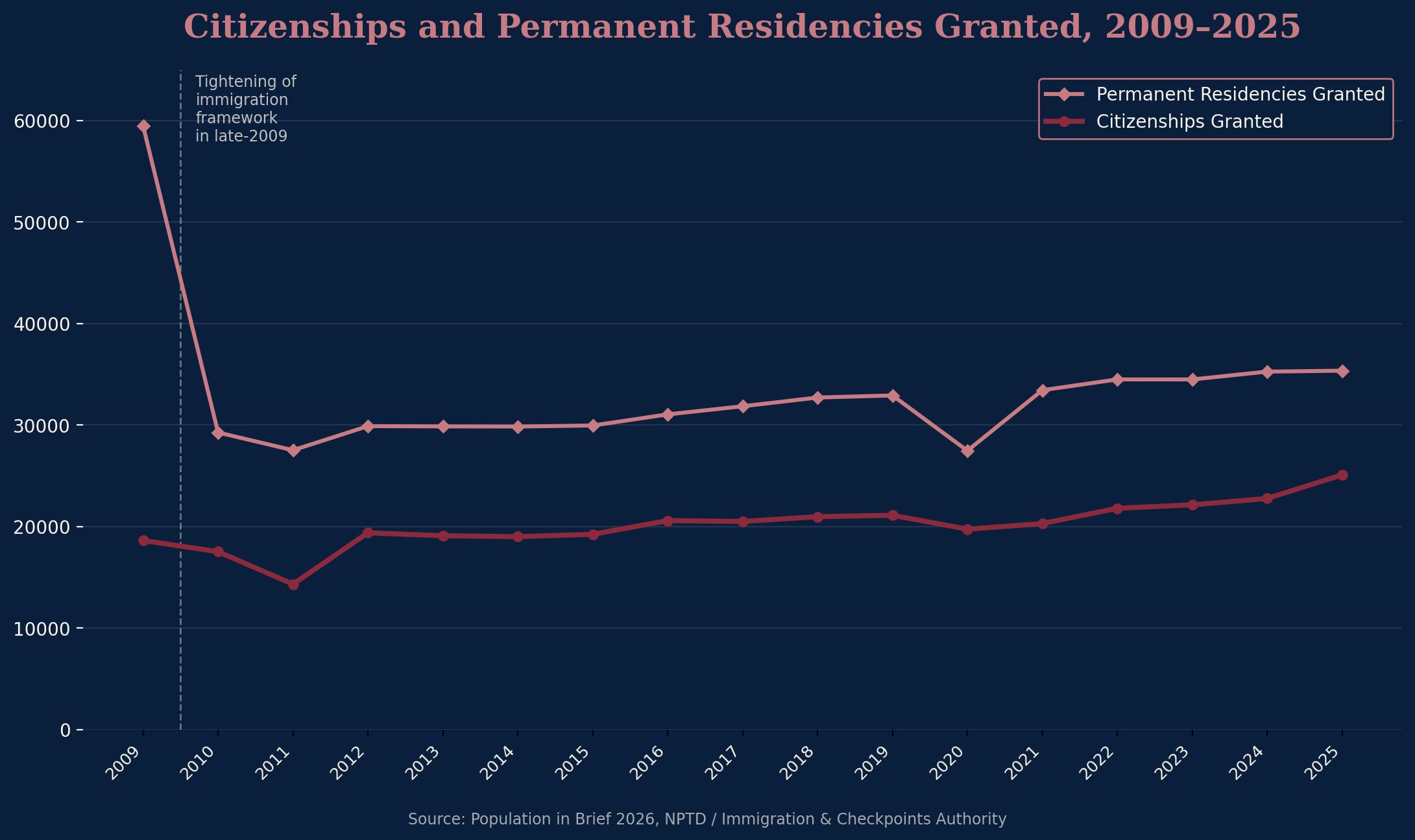
In 2025, Singapore granted citizenship to 25,094 individuals and permanent residency to 35,352 individuals, according to the Population in Brief 2026 report by the National Population and Talent Division (NPTD). New citizenships rose 10.2 percent from 22,766 in 2024, while new PR grants remained broadly stable, up slightly from 35,264. The average number of citizenships and PRs granted annually from 2021 to 2025 (22,400 and 34,600 respectively) was higher than from 2016 to 2020 (20,600 and 31,200), continuing a gradual rise since the tightening of the immigration framework in late 2009.
The published numbers at a glance
| Year | Permanent residencies granted | Citizenships granted |
|---|---|---|
| 2016 | 31,050 | 20,589 |
| 2017 | 31,849 | 20,503 |
| 2018 | 32,710 | 20,974 |
| 2019 | 32,915 | 21,115 |
| 2020 | 27,470 | 19,741 |
| 2021 | 33,435 | 20,297 |
| 2022 | 34,493 | 21,802 |
| 2023 | 34,491 | 22,140 |
| 2024 | 35,264 | 22,766 |
| 2025 | 35,352 | 25,094 |
Five-year averages, 2021 to 2025: approximately 34,600 permanent residencies and 22,400 citizenships granted per year, higher than the preceding five-year period (2016 to 2020: 31,200 and 20,600 respectively).
Who is granted citizenship and PR
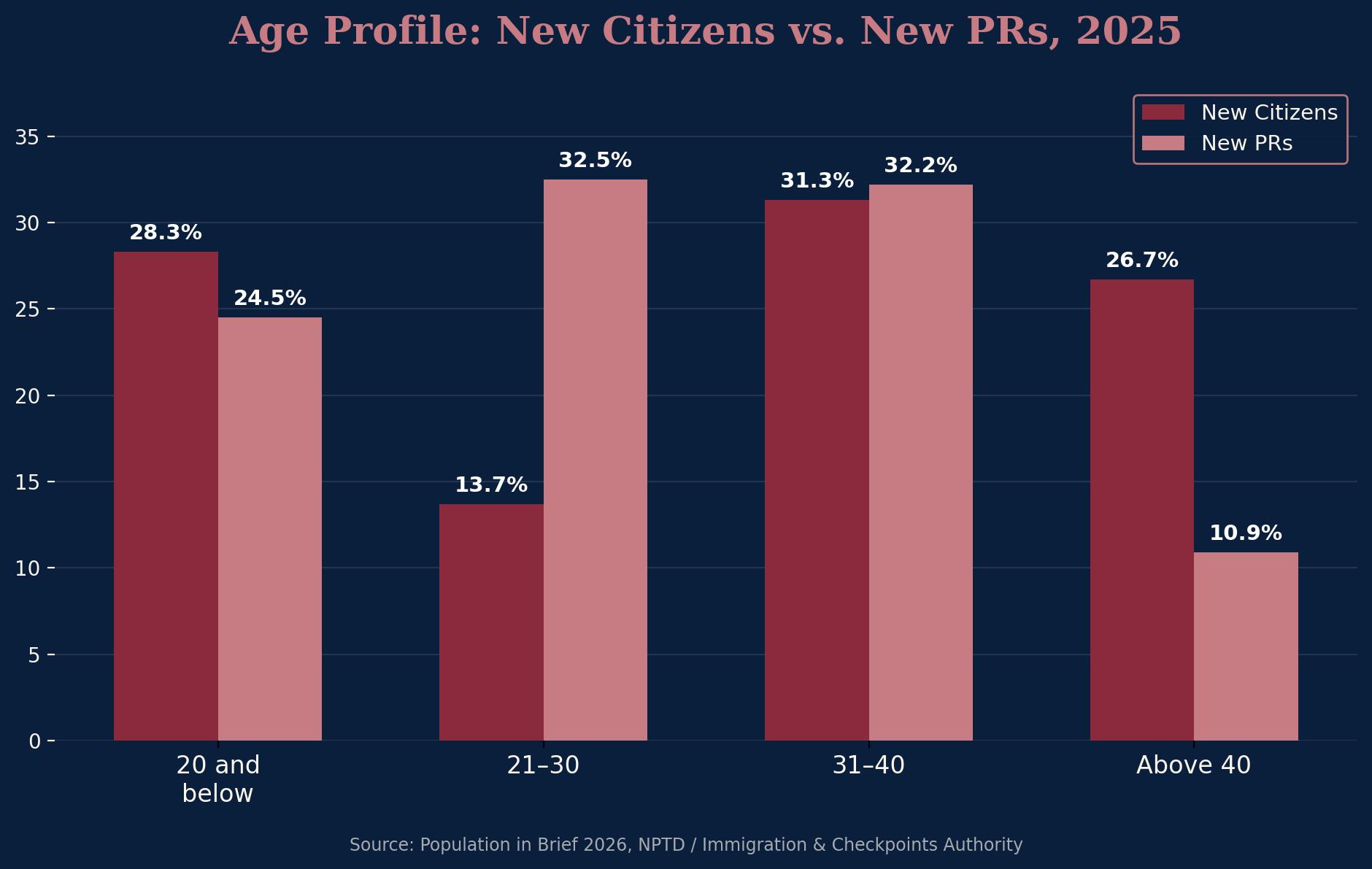
By age, new citizens in 2025 skewed somewhat older than new PRs: 31.3 percent of new citizens were aged 31 to 40 and 26.7 percent were above 40, compared to 32.2 percent and 10.9 percent respectively for new PRs, who skewed more toward the 21 to 30 age band (32.5 percent). This reflects that citizenship is generally the second step after a period as a PR, since all new adult citizens come from the pool of existing PRs. By region of origin, both groups remained dominated by Southeast Asia (62.1 percent of new citizens, 61.6 percent of new PRs) and other Asian countries, broadly unchanged from 2024. Over 83 percent of both new citizens and new PRs aged 20 and above held post-secondary qualifications or higher.
Population composition
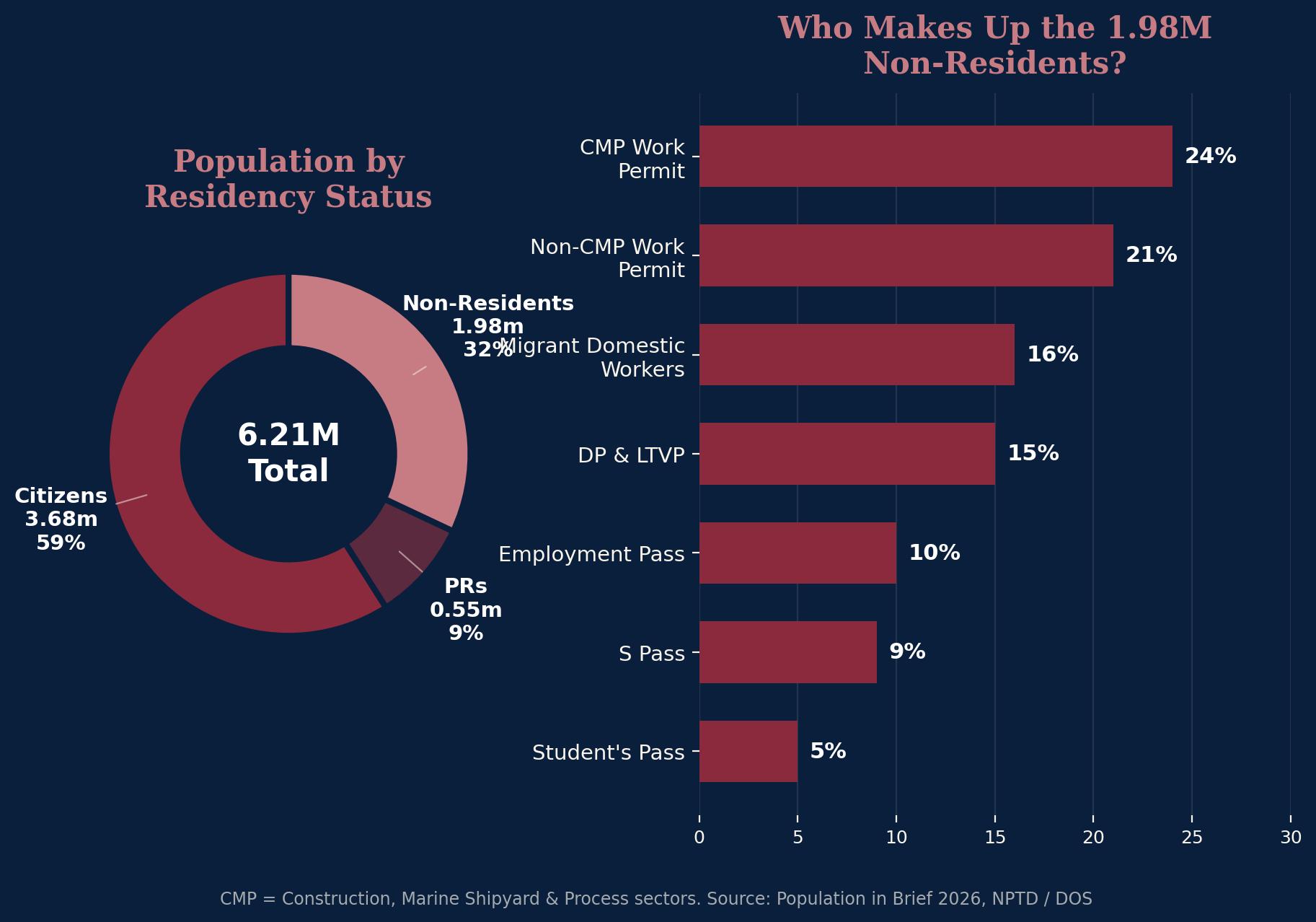
Singapore's total population reached 6.21 million as at June 2026, comprising 3.68 million citizens (59 percent), 0.55 million permanent residents (9 percent), and 1.98 million non-residents (32 percent). The non-resident population spans the full range of foreign workforce pass types, dependants, and international students.
Why it matters
NPTD's report states directly that immigration helps to moderate the impact of ageing and low birth rates on Singapore's citizen population, and keeps the citizen population from shrinking over the long term. Citizenship intake levels are part of broader population planning efforts, and may reflect the need to maintain a sustainable population base, ongoing economic and workforce considerations, and long-term national planning priorities.
Key takeaways
Singapore continues to maintain a structured approach to citizenship and PR intake, with both figures trending higher over the past five years than the preceding five. New citizens and new PRs follow broadly similar origin and qualification profiles, while differing in age, consistent with citizenship typically following a period as a PR.
Beacon's view
This update highlights the importance of understanding Singapore's immigration framework within a broader national context. While citizenship and PR intake figures provide general insight into population planning, individual applications continue to be assessed based on multiple factors. Public information indicates that applications are reviewed holistically, taking into account each applicant's profile and circumstances.
For individuals exploring Singapore PR or Citizenship, it is useful to consider how broader policy directions may relate to long-term planning, while recognising that outcomes may vary.